
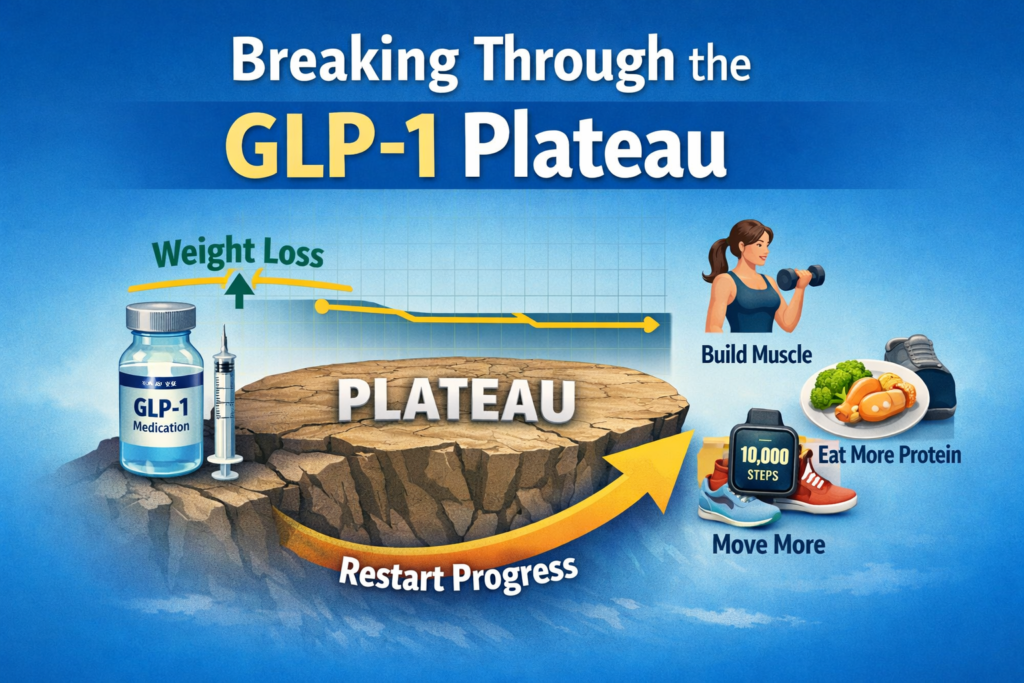
Why People Plateau on GLP-1 Medications (And What You Can Do About It)
By Amy Gill, Your Pharmacist Who Cares
If you’ve watched television lately — especially during major sporting events — you’ve probably seen commercial after commercial for GLP-1 medications.
It’s one of the most talked-about topics in healthcare right now.
And every week I talk with patients who have questions like:
- How do GLP-1 medications actually work?
- Why do people lose weight quickly at first and then plateau?
- What can I do if my weight loss stops?
Let’s break it down.
What Is a GLP-1?
GLP-1 stands for Glucagon-Like Peptide-1.
It’s actually a naturally occurring hormone in your body that is released from your gut after you eat.
This hormone plays several important roles in how your body regulates hunger, blood sugar, and digestion.
When GLP-1 is activated, it sends signals to multiple systems in your body.
1. It Signals the Brain
GLP-1 tells your brain that you are feeling full.
This helps reduce how much food you eat because your brain recognizes that your body has had enough.
2. It Signals the Pancreas
GLP-1 helps regulate blood sugar by:
- Increasing insulin release when blood sugar rises
- Decreasing glucagon, which raises blood sugar
This is actually why GLP-1 medications were originally developed for diabetes treatment.
3. It Slows Down Digestion
GLP-1 also slows stomach emptying, meaning food stays in your stomach longer.
That leads to:
- Feeling full longer
- Less snacking
- Reduced cravings
- Fewer urges for sweets or “food noise”
Many people appreciate that they can still eat normally without feeling deprived, but they simply feel satisfied faster.
Why Do People Plateau on GLP-1 Medications?
One of the most common questions I hear is:
“Amy, I lost weight at first, but now nothing is changing.”
This is actually very common.
Most people will lose about 10–15% of their starting body weight on GLP-1 medications.
For example:
- Starting weight: 200 pounds
- Typical loss: 20–30 pounds
After that point, the body often hits a plateau.
Why does this happen?
Because your body is designed to protect against weight loss.
What Happens in Your Body During a Plateau
When you lose weight, your body shifts into survival mode.
Several things start to change:
Metabolism Slows Down
Your body requires fewer calories to maintain a smaller body weight.
Hunger Hormones Increase
Your body tries to push you back toward your original weight.
Your Body Becomes More Efficient
Daily movement and exercise begin burning fewer calories than before.
Appetite Suppression Stabilizes
Early on with GLP-1 medications, many people experience a dramatic drop in appetite.
But after a few weeks, your body adjusts, and that effect becomes more stable.
This plateau can happen around 4–8 weeks after starting treatment.
How to Break Through a GLP-1 Plateau
The good news is that weight loss can resume when you adjust your habits.
Here are the most important changes that make a difference.
1. Increase Your Protein Intake
Protein is critical for maintaining muscle and supporting metabolism.
Most adults should aim for approximately:
90–120 grams of protein per day
Low protein intake can lead to muscle loss, which slows metabolism and stalls weight loss.
2. Strength Train 2–3 Times Per Week
I talk about this almost every week — because it is that important.
Strength training is a non-negotiable for long-term health and weight loss.
Why?
Because muscle:
- Boosts metabolism
- Burns more calories
- Helps your body burn fat more efficiently
We all lose muscle mass as we age, so resistance training helps prevent that decline.
3. Increase Your Daily Movement
Sometimes the simplest solution is more daily steps.
Walking more during the day can:
- Increase calorie burn
- Support metabolism
- Improve energy levels
Small changes add up.
4. Reevaluate Your Calories
As your body weight decreases, your calorie needs also decrease.
It may be helpful to review your nutrition and portion sizes as your body changes.
5. Prioritize Sleep
Sleep has a major impact on metabolism, hormones, and cravings.
Improving sleep can help support continued weight loss.
Common Mistakes People Make on GLP-1 Medications
The most common mistake I see is not eating enough protein.
Low protein intake can lead to:
- Muscle loss
- Lower metabolism
- Weight loss stalls
Another mistake is focusing only on cardio exercise.
Cardio is great — walking, biking, running, rowing — but strength training must be included.
Both work best together.
Support for GLP-1 Health and Nutrition
Recently, I began using a new nutritional supplement designed to support the body’s natural GLP-1 response.
It works by helping enhance the body’s natural hormone pathways that reduce cravings and food noise.
Many people struggle with constant cravings — especially sweets — and this type of support can help people feel more in control of their eating habits.
For me personally, I noticed something interesting after just a week:
the constant urge to snack or look for sweets started to disappear.
That kind of shift can make a big difference for long-term success.
The Bigger Picture: Energy, Confidence, and Health
Spring is around the corner, and many people are thinking about feeling healthier and more confident again.
Weight loss isn’t just about numbers on the scale.
It’s about:
- Energy
- Confidence
- Strength
- Feeling comfortable in your own body
When we start improving our habits — nutrition, strength training, sleep, and mindset — the results go far beyond weight loss.
I’m Here to Help
If you’ve been thinking about GLP-1 medications or you’re already on them and have questions, please don’t hesitate to reach out.
I talk with people about this every week, and I would love to help guide you through the process.
My goal is simple:
To help you feel healthier, happier, and more energized.
Because when we feel better, everything in life improves.
Amy Gill
Home
Your Pharmacist Who Cares