
By the Time You’re Thirsty, You’re Already Behind
That may sound surprising, but it’s one of the most important things to remember during the warmer months.
As summer activities pick up, many people spend more time outdoors at sporting events, parks, pools, vacations, and family gatherings. While we’re busy having fun, it’s easy to forget one simple habit that can have a major impact on our health: staying hydrated.
The good news? Dehydration is often preventable.
Why Hydration Matters
Your body is made up of approximately 60% water, and that water plays a role in almost every major function in your body.
Water helps:
- Regulate body temperature
- Deliver nutrients to your cells
- Remove waste products
- Lubricate joints
- Support brain function
- Help medications work properly
When you don’t get enough fluids, your body starts to struggle—and the effects can happen faster than you think.
Dehydration Can Affect Your Brain
One of the first things many people notice when they’re dehydrated is brain fog.
Even mild dehydration can impact:
- Concentration
- Memory
- Mood
- Alertness
- Energy levels
Research shows that losing as little as 1–2% of your body’s water can affect cognitive performance.
If you’ve ever felt tired, unfocused, or irritable and then felt better after drinking a glass of water, dehydration may have been part of the problem.
Increased Risk of Dizziness and Falls
Dehydration can also lead to:
- Dizziness
- Lightheadedness
- Weakness
For older adults, these symptoms can significantly increase the risk of falls.
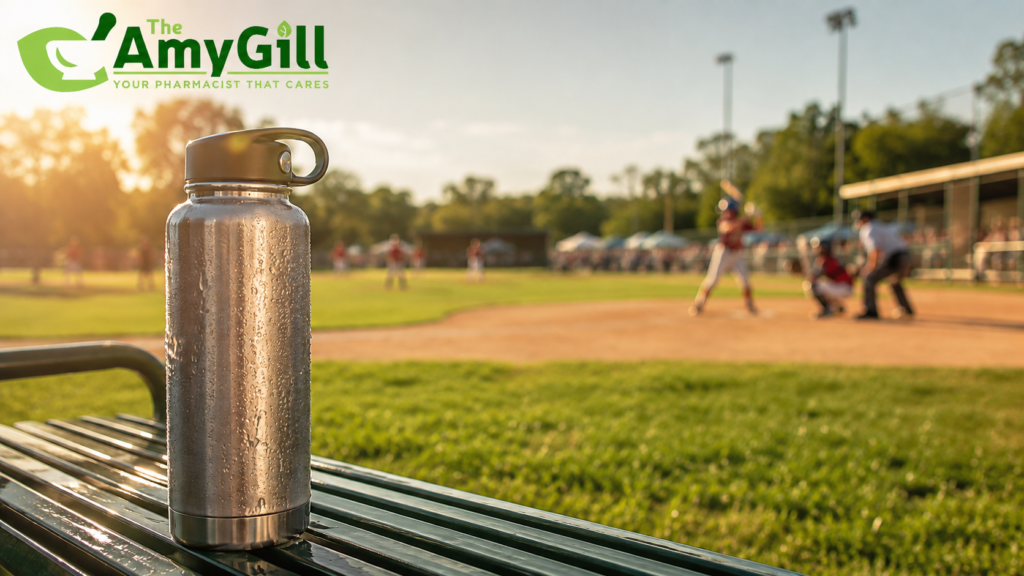
During summer activities, especially outdoor sporting events, it’s important to keep grandparents and older family members hydrated and protected from excessive heat. Encourage them to sit in the shade, use umbrellas or tents, and drink fluids regularly.
Your Kidneys Depend on Water
Your kidneys need adequate fluids to function properly.
When you’re dehydrated:
- Urine becomes darker and more concentrated
- The risk of kidney stones increases
- Kidney function can be affected
- Severe dehydration can contribute to kidney injury
Think about your first trip to the bathroom in the morning. After several hours without drinking fluids, your urine is often darker because your body is conserving water.
That’s a reminder of how important hydration is throughout the day.
Medications That Can Increase Dehydration Risk
As a pharmacist, this is something I pay close attention to.
Certain medications can increase your risk of dehydration, including:
Diuretics (Water Pills)
These medications help remove excess fluid from the body and are commonly prescribed for:
- High blood pressure
- Heart conditions
- Swelling and fluid retention
Because they increase fluid loss, it’s especially important to stay hydrated while taking them.
Some Diabetes Medications
Certain diabetes medications can increase urination and contribute to fluid loss.
Laxatives
Laxatives can also increase dehydration risk, especially if they cause frequent bowel movements.
If you’re taking any of these medications, be extra mindful of your fluid intake—particularly during hot weather.
Heat-Related Illnesses Become More Dangerous
Your body relies on water to cool itself.
Without enough fluids, your natural cooling system doesn’t work as efficiently, increasing the risk of:
Heat Exhaustion
Symptoms may include:
- Heavy sweating
- Weakness
- Dizziness
- Nausea
- Headache
Heat Stroke
Heat stroke is a medical emergency and can be life-threatening.
Staying hydrated is one of the simplest ways to help protect yourself from serious heat-related illnesses.
Dehydration Can Cause Constipation
Many people don’t realize dehydration can affect digestion.
When your body lacks water:
- Stools become harder
- Bowel movements become more difficult
- Constipation becomes more likely
Adequate hydration helps move waste through your digestive system more efficiently.
Signs You May Be Dehydrated
Watch for these common warning signs:
- Dark yellow urine
- Dry mouth
- Headaches
- Fatigue
- Dizziness
- Muscle cramps
- Increased thirst
If you’re experiencing these symptoms, your body may already be asking for more fluids.
Simple Ways to Stay Hydrated
Carry a Reusable Water Bottle
Having water readily available makes it much easier to drink consistently throughout the day.
Many insulated water bottles keep drinks cold for hours, and refill stations are now available in airports, parks, schools, and many public places.
Drink Before You’re Thirsty
Don’t wait for thirst to remind you.
Make drinking water a habit throughout the day.
Increase Fluids During Activity
You may need more water when:
- Exercising
- Working outdoors
- Spending time in hot weather
- Attending outdoor events
Eat Water-Rich Foods
Hydration doesn’t only come from beverages.
Foods with high water content include:
- Watermelon
- Cucumbers
- Berries
- Oranges
- Lettuce
These foods can help support hydration while providing important nutrients.
The Bottom Line
The best hydration strategy is prevention.
Don’t wait until you’re thirsty. By then, your body may already be trying to catch up.
A few simple habits—carrying a water bottle, drinking regularly, and eating water-rich foods—can help you avoid dehydration and the many health problems that can come with it.
As temperatures rise, make hydration a priority for yourself and your family. And remember, your children are watching. When they see you making healthy choices, they’re more likely to do the same.
Stay hydrated, stay healthy, and take care of yourself.
— Amy Gill, Your Pharmacist Who Cares