
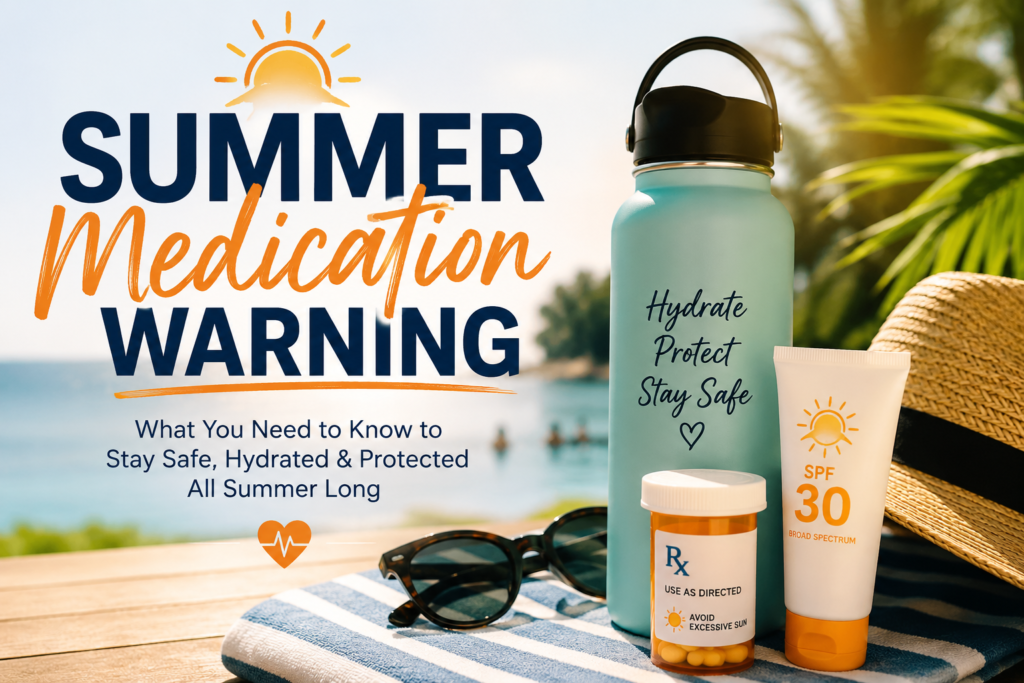
Why Heat, Sun, and Certain Medications Can Be a Dangerous Combination
Summer is finally here. Pool days. Lake trips. Vacations. Yard work. Long afternoons in the sun.
But what many people don’t realize is this:
Some medications can make summer much harder on your body.
Certain medications can increase your risk of:
- Dehydration
- Overheating
- Sun sensitivity
- Severe sunburn
- Dizziness and fatigue
And when temperatures rise, those side effects can become dangerous fast.
As a pharmacist, this is one of the biggest things I want people to understand before summer activities really kick off.
Why Summer Heat Affects Medications Differently
Your body already works harder in the heat.
You sweat more.
You lose fluids faster.
Your electrolyte balance changes.
Your kidneys work harder.
Your skin becomes more vulnerable to sun exposure.
Now combine that with medications that already affect hydration or sun sensitivity… and problems can happen quickly.
That’s why those conversations with your pharmacist matter — even if you’ve been taking the same medication for years.
Common Medications That Can Cause Summer Issues
Several medications can increase dehydration or sun sensitivity, including:
- Diuretics (“water pills”)
- Some blood pressure medications
- Certain diabetes medications
- Antihistamines
- Stimulants
- Some antidepressants
- GLP-1 medications
- Acne medications
- Certain antibiotics
Many people don’t connect symptoms like headaches, dizziness, muscle cramps, brain fog, or fatigue with dehydration.
But those can all be warning signs your body needs more fluids and electrolytes.
The Biggest Hydration Mistake People Make
Waiting until they’re thirsty.
If you’re already thirsty, dehydration has already started.
Proper hydration starts BEFORE:
- Going outside
- Working in the yard
- Spending the day at the pool
- Going to amusement parks
- Sporting events
- Long summer travel days
And hydration is about more than just water.
Electrolytes matter too.
Especially during:
- Extreme heat
- Heavy sweating
- Outdoor activities
- Long days in the sun
Drinks That Can Actually Make Dehydration Worse
Many popular summer drinks can actually work against hydration.
That includes:
- Excess alcohol
- Sugary caffeinated drinks
- High-sugar energy drinks
These can increase urination and contribute to dehydration even faster.
Instead, focus on:
- Water
- Electrolyte support
- Lower-sugar hydration options
Sun Sensitivity Is More Common Than People Think
Some medications don’t just increase sunburn risk.
They can cause:
- Splotchy skin reactions
- Irritation
- Burning
- Increased skin sensitivity
And the areas people forget most are often the ones that burn the worst:
- Scalp parts
- Ears
- Nose
- Shoulders
That’s why sunscreen matters — even for quick outdoor activities like:
- Yard work
- Walking
- Pool days
- Watching sports
- Running errands
Sunscreen Isn’t Optional
Your skin is your body’s largest organ.
Protect it.
A good mineral sunscreen can help reduce exposure while still protecting sensitive skin. Reapplying sunscreen is just as important as putting it on the first time.
And don’t forget:
- Sunglasses for UV eye protection
- Hats that cover your ears
- Shade breaks during peak heat hours
The sun ages skin faster than almost anything else.
Watch Older Adults and Children Closely
Older adults and children are especially vulnerable to overheating and dehydration.
Older adults may:
- Forget to drink enough fluids
- Stay outside too long
- Overheat faster in extreme temperatures
Children often get so busy playing that they don’t stop to hydrate.
As adults, we have to help monitor both.
That means:
- Encouraging fluids often
- Providing shade
- Taking cooling breaks
- Watching for signs of heat exhaustion
Don’t Ignore Medication Warning Labels
Those “avoid excessive sun” stickers on medication bottles are there for a reason.
Even topical creams and acne medications can dramatically increase sun sensitivity.
If you’re unsure whether your medication affects:
- Heat tolerance
- Hydration
- Sun exposure
- Electrolytes
Ask your pharmacist.
That simple conversation could prevent a miserable — or dangerous — summer experience.
Final Thoughts
Summer should be fun.
But staying healthy in the heat takes preparation.
Hydrate before you’re thirsty.
Protect your skin.
Pay attention to medication warnings.
Watch older adults and children closely.
And don’t ignore signs of dehydration.
Your body will thank you later.
— Amy Gill
“Your Pharmacist Who Cares”