

How to improve gut health without falling for cleanses or buying unnecessary supplements? Start with simple daily habits.
Is gut health connected to your overall health, or is it just another internet trend?
Gut health matters, but improving it doesn’t have to mean buying a cleanse or taking the latest supplement. Eating fiber-rich foods, getting enough sleep, managing stress and asking questions before choosing supplements are practical places to start.
I’m Amy Gill, RPh — Your Pharmacist Who Cares, and gut health is a topic I hear about often at the pharmacy. People ask which probiotics to take, whether they need more fiber, and whether a gut cleanse is a good idea.
Let’s look at what you can do every day—and when it makes sense to ask for help.
How to Improve Gut Health: 7 Simple Daily Habits
Is gut health connected to your overall health, or is it just another internet trend?
Gut health matters, but improving it doesn’t have to mean buying a cleanse or taking the latest supplement. Eating fiber-rich foods, getting enough sleep, managing stress and asking questions before choosing supplements are practical places to start.
I’m Amy Gill, RPh — Your Pharmacist Who Cares, and gut health is a topic I hear about often at the pharmacy. People ask which probiotics to take, whether they need more fiber, and whether a gut cleanse is a good idea.
Let’s look at what you can do every day—and when it makes sense to ask for help.
Why Is Gut Health Important?
Your digestive system helps break down food and absorb nutrients. The large intestine is also home to many microbes, including bacteria, that help with digestion.
Researchers continue to study how the gut, brain and other body systems interact. But it’s easy to overstate what that means. A “gut health” product is not a shortcut to better overall health, and a symptom such as bloating does not automatically mean your gut is unhealthy.
The everyday habits below can support digestive health without relying on a quick fix.
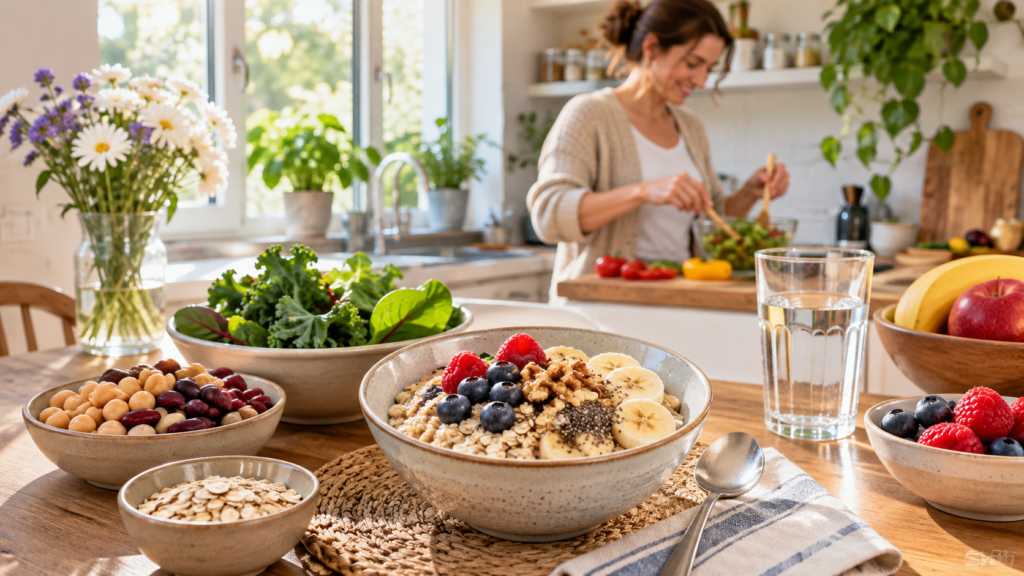
For many people, learning how to improve gut health starts with what they eat each day
1. Add More Fiber-Rich Foods
If you’re wondering how to improve gut health naturally, start by looking at the fiber in your diet.
Many gut microbes use fiber as food. Fiber-rich foods also support regular bowel movements. Good sources include:
- Fruits and vegetables
- Beans and lentils
- Oats
- Whole grains
If you want to eat more fiber, increase it gradually. A sudden change can cause gas or bloating for some people. NIDDK recommends adding fiber a little at a time so your body can adjust. Learn more about fiber and digestive health.
If you’re considering a fiber supplement or aren’t sure how much is appropriate for you, talk with your pharmacist or healthcare provider.
2. Ask Before Choosing a Probiotic
Probiotic products line the shelves of many pharmacies and stores. Labels may list millions or billions of live microorganisms, but the number on the front of a bottle doesn’t tell you whether that product fits your needs.
Probiotics are live microorganisms. Different products may contain different organisms, and evidence for one use doesn’t mean every probiotic will help with every concern. Not everyone needs a probiotic. NCCIH notes that the evidence varies depending on the product and health purpose. Read more about probiotics, their uses and safety.
Prebiotics are substances, including certain types of fiber, that gut microbes can use. Digestive enzymes are different: your body makes enzymes to help break down food. Enzyme supplements are not automatically needed for general digestive support.
Before spending money on a probiotic, prebiotic or enzyme supplement, ask a pharmacist or healthcare provider whether it makes sense for you.
3. Talk With Your Pharmacist When You Take an Antibiotic

Antibiotics can affect bacteria in your digestive system. When people pick up an antibiotic, they sometimes ask, “My doctor said I should take a probiotic. Which one should I get?”
The answer can depend on the antibiotic, the probiotic product and your health. Ask your pharmacist whether a probiotic is appropriate for you and how to take it with your medication. Don’t start or stop a medication based on general advice you see online.
4. Be Skeptical of Gut Cleanses and Detoxes
You may see products promising to “flush toxins” or reset your gut. These claims can sound appealing, but a cleanse is not a substitute for everyday habits or medical care. NCCIH reports that there is limited clinical evidence supporting many detox and cleanse claims. Learn what the research says about detoxes and cleanses.
Instead of looking for a one-time gut reset, focus on habits you can maintain, such as eating a varied diet and getting enough sleep.
5. Don’t Assume Bloating Means Your Gut Is Unhealthy
Occasional bloating can happen for different reasons. Eating quickly, drinking carbonated beverages, eating certain foods or having a larger meal than usual may contribute.
But ongoing or bothersome bloating deserves attention. Talk with a healthcare provider if your symptoms change suddenly or occur with abdominal pain, diarrhea, constipation or unexplained weight loss. See NIDDK’s guidance on gas symptoms.
6. Notice How Stress Affects Your Digestion
Have you ever felt your stomach react when you were nervous or under pressure?
The gut and brain communicate with each other. Stress can affect digestive symptoms for some people, including people with conditions such as irritable bowel syndrome. It may help to notice whether stressful days, certain meals or changes in routine seem connected to your symptoms.
You can’t remove every source of stress, but you may be able to make small changes to your routine or ask a healthcare provider about ongoing symptoms.
7. Make Sleep Part of Your Routine
Sleep is one part of a healthy daily routine. When you’re tired, it can be harder to keep up with meals, activity and stress-management habits.
A consistent bedtime and wake time may help you build a routine that supports your overall well-being. Sleep isn’t a cure for digestive problems, though. If symptoms keep affecting your sleep or daily life, talk with a healthcare provider.
Plan Ahead for Travel and College
Travel can change your meals, schedule and sleep. Before a trip, pack any medications you normally take and check with your pharmacist if you have questions about medicine or supplement use. Don’t start a new gut health product just before traveling without asking whether it’s suitable for you.
Students leaving for college may face new foods, schedules and stress, too. A conversation about meals, sleep and how to get help when they feel unwell can be useful as they adjust.
How to Improve Gut Health: Start With Everyday Habits
You don’t need to begin with a cleanse or a shelf full of supplements. Start with manageable habits: eat fiber-rich foods, increase fiber gradually, build a steady sleep routine and notice what seems to affect your digestion.
If you’re standing in the supplement aisle thinking, “I have no idea what I’m supposed to buy,” ask your pharmacist. I’d rather help you understand your options than have you spend money on something that may not fit your needs.
Amy Gill, RPh
Your Pharmacist Who Cares
This article is for general educational purposes and isn’t a substitute for individualized medical advice. Talk with your pharmacist, physician or other healthcare professional about your medications, supplements, symptoms and health needs.
FAQ section
Does everyone need a probiotic?
No. Probiotics are not right for everyone, and their potential usefulness depends on the product and purpose. Ask a pharmacist or healthcare provider before choosing one.
What foods can support gut health?
Fiber-rich foods include fruits, vegetables, beans, oats and whole grains. Add fiber gradually, especially if you aren’t used to eating much of it.
Should I do a gut cleanse?
A cleanse is not necessary for everyone, and many detox claims have limited clinical evidence. Ask a healthcare professional about persistent digestive symptoms instead of relying on a cleanse.
When should I talk with a healthcare provider about bloating?
Talk with a healthcare provider if bloating is ongoing, bothersome, changes suddenly or occurs with symptoms such as abdominal pain, diarrhea, constipation or unexplained weight loss. NIDDK
Gut health is one part of your overall wellness. Everyday habits like sleep, nutrition and movement can support your health in different ways. For more simple, practical ideas, read Amy’s guide to supporting your immune system naturally.